
Christopher Nolan's "Odyssey": A Cinematic Masterpiece for the Big Screen
Christopher Nolan's adaptation of Homer's "Odyssey" transforms the epic tale into a visually stunning cinematic experience, exploring themes of homecoming and the consequences of war.
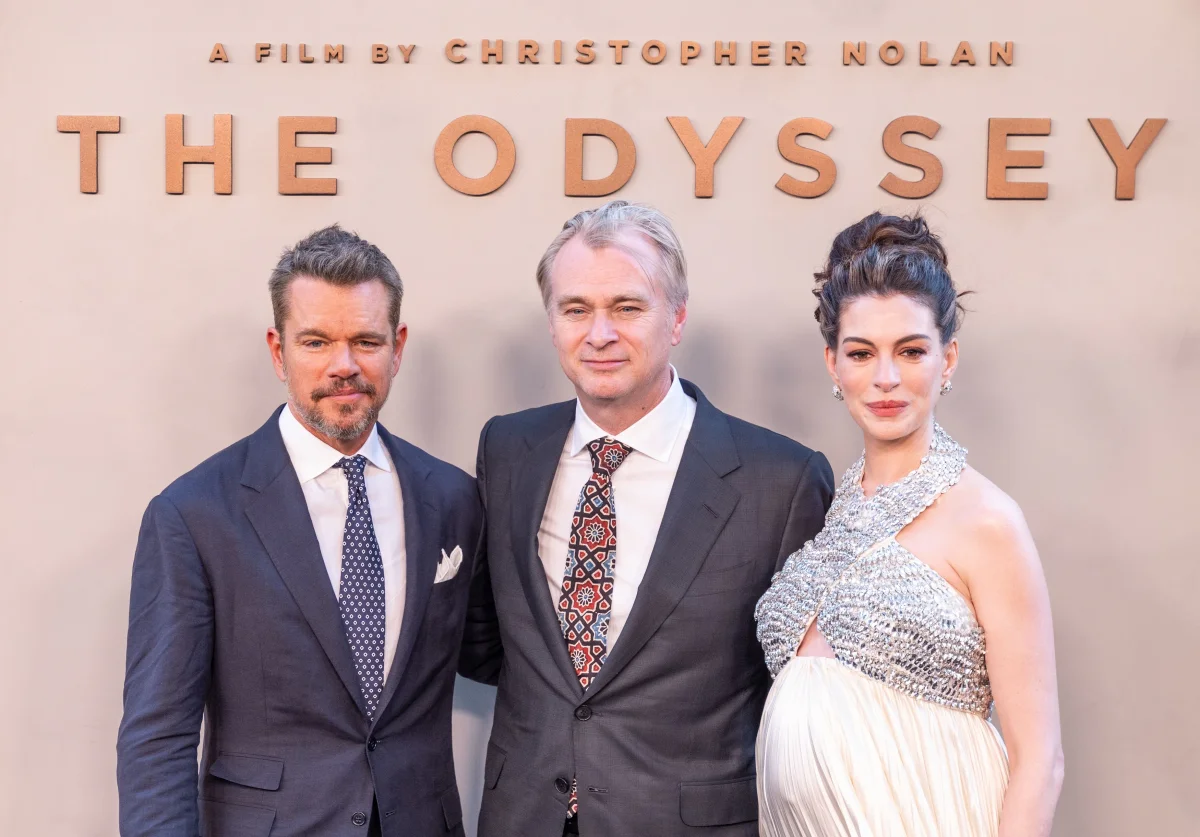
In an ambitious endeavor, Christopher Nolan transforms Homer's "Odyssey" into a visually stunning cinematic experience. This adaptation stands out among the numerous interpretations of the epic tale of Odysseus and his perilous journey home after the Trojan War, as it is crafted with an unwavering focus on the grandeur of the big screen.
With a runtime approaching three hours, "Odyssey" demands the viewer's full attention and engagement. Those willing to immerse themselves in its world will find themselves enveloped in a total work of art that weaves together imagery, music, mythology, and human drama.
The Story of "Odyssey"
Set in the aftermath of the Trojan War, the Greek king Odysseus yearns to return to Ithaca, where his wife Penelope and son Telemachus await his return. However, what begins as a seemingly straightforward journey quickly devolves into a long and treacherous odyssey.
Odysseus and his crew encounter storms, foreign cultures, and must confront seemingly supernatural threats. Meanwhile, in Ithaca, the hope of his return begins to wane, and Telemachus grows up without his father, embarking on his quest for answers about Odysseus’s fate.
Christopher Nolan refrains from presenting this well-known tale as a mere guided tour through Greek mythology. Instead, he transforms it into a grand adventure that explores themes of survival, homecoming, family, guilt, and the remnants of a person after war.
A Film as a Total Work of Art
"Odyssey" is one of those rare films where visuals, music, set design, and narrative coalesce seamlessly. The landscapes depicted are vast, beautiful, and menacing all at once. The sea is not just a backdrop; it represents an unpredictable force of nature. Ships, shores, caves, and battlefields possess a palpable materiality, creating a world that feels rugged, heavy, and perilous.
The film's commendation for its restrained use of digital effects is well-deserved. While no film of this magnitude can entirely forgo visual effects, Nolan emphasizes real locations, authentic sets, and tangible physicality, resulting in a film that feels more substantial than many contemporary fantasy productions.
Complementing this is the cinematography by Hoyte van Hoytema. "Odyssey" is the first feature film shot entirely with IMAX cameras. Even in a standard theater, the visuals are striking, and the experience is likely to be even more breathtaking in an IMAX setting.
Ludwig Göransson's Music Guides the Journey
A crucial aspect of this cinematic experience is the score by Ludwig Göransson. Collaborating with Nolan once again after "Tenet" and "Oppenheimer," Göransson delivers a soundtrack that transcends mere accompaniment to the visuals.
The music draws the audience into the narrative, amplifying the tension at sea and lending a near-archaeic weight to the film's pivotal moments. It also captures quieter tones of longing, loss, and the hope of return, making the soundtrack one of the film's standout features, worthy of independent listening.
Matt Damon as a Compelling Odysseus
Matt Damon anchors the film with his portrayal of Odysseus. His character is not a flawless warrior who overcomes every challenge through sheer strength. Instead, Damon presents a clever, weary, and complex man who simply wishes to return home after years of conflict and wandering.
This vulnerability renders his performance believable. Odysseus is a strategist, leader, and survivor, yet he is also a man whose decisions have far-reaching consequences for others. Damon imbues him with toughness and authority while retaining his humanity.
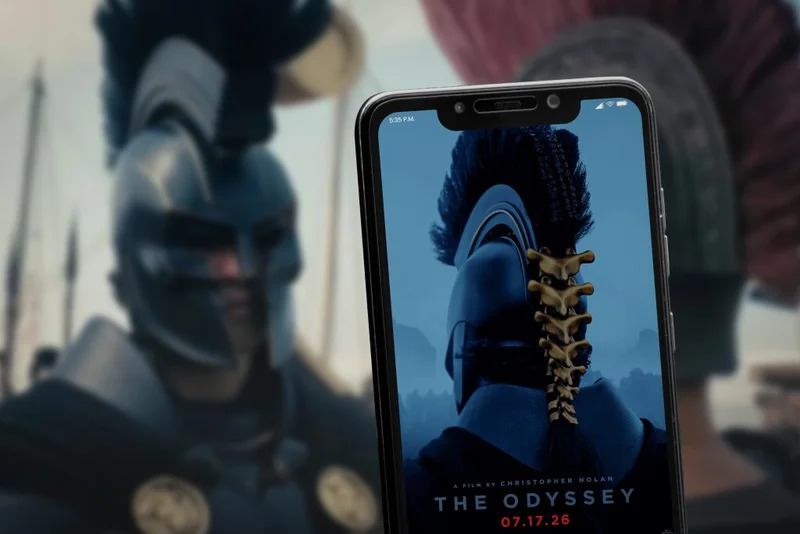
Tom Holland shines as Telemachus, providing depth to the role beyond that of a mere youthful counterpart to his famous father. He portrays a young man grappling with his father's absence while seeking to carve out his own identity. The bond between father and son serves as one of the emotional pillars of the film.
Elliot Page convincingly integrates into the film as Sinon, dispelling any pre-release criticism regarding casting choices. His portrayal fits naturally within the story, avoiding any sense of being an outsider.
Zendaya takes on the role of the goddess Athena. While her casting is intriguing, her character appears somewhat less impactful compared to others in the ensemble. In a cast filled with strong performances, her role does not resonate as powerfully as those of Damon, Holland, or Page.
Other notable cast members include Anne Hathaway as Penelope, Robert Pattinson as Antinous, and Charlize Theron as the nymph Calypso.
How Does the Film Deviate from Homer's "Odyssey"?
Familiarity with Homer's epic reveals several deviations in the film. The original narrative encompasses numerous episodes, flashbacks, and storytelling layers, beginning with Odysseus’s departure from Troy and continuing in a nonlinear fashion until his arrival in Ithaca.
For the film, this vast material is condensed, reordered, and tailored to fit a modern visual narrative. Certain characters and events are given different emphases, while encounters are shortened or merged, creating a cohesive cinematic story from the sprawling epic.
The portrayal of the divine also diverges from Homer’s version. In the original, the Olympian gods intervene directly in human affairs. In contrast, Nolan opts to depict the supernatural as more ambiguous and corporeal. Some events can be interpreted as divine intervention or natural phenomena, shaped by human perception.
Typically, significant deviations from a literary source can be jarring. However, in "Odyssey," such changes are forgivable. Nolan does not simply replicate every aspect of the original but translates its core themes into his cinematic language.
At its heart, the story remains intact: A man strives to return home after years of war. Throughout his absence, his homeland, family, and he himself undergo profound transformations. Thus, Odysseus finds himself not only battling external threats but also confronting the consequences of his own choices.
Homer's narrative already provides a fantastic foundation. Nolan does not need to artificially enhance its spectacle. His greatest achievement lies in making its monumental imagery and timeless conflicts accessible to modern audiences.
Should You See "Odyssey" in Theaters?
Absolutely. "Odyssey" is uniquely designed for the big screen. The landscapes, maritime journeys, music, and physical staging lose some of their impact on a smaller display.
For those with the opportunity to experience the film in IMAX or another large premium format, it is highly recommended. In hindsight, experiencing "Odyssey" in IMAX would likely amplify the full effect of its visuals and sound.
Even in a standard theater, the film offers an extraordinary experience. Despite its nearly three-hour runtime, it never feels like a mere sequence of spectacular scenes. Viewers can immerse themselves in this world and journey alongside Odysseus.
Christopher Nolan's "Odyssey" is monumental cinema, telling a surprisingly human story about homecoming, family, and the repercussions of war.
Matt Damon excels as Odysseus, Tom Holland impresses as Telemachus, and Elliot Page fits seamlessly into the ensemble. While Zendaya's performance may not reach the heights of the strongest portrayals, it does not detract from the overall impression.
The film's breathtaking visuals, tangible locations, and Ludwig Göransson's remarkable score are particularly noteworthy. While some may take issue with deviations from Homer's original, such changes can be overlooked for this distinct interpretation.
"Odyssey" is not a film to be casually viewed on a couch; it belongs in theaters—preferably on the largest screen available.
⭐️⭐️⭐️⭐️⭐️ Rating: 5 out of 5 stars
Facts about "Odyssey"
Original Title: The Odyssey Genre: Adventure, Action, Fantasy Director and Screenwriter: Christopher Nolan Literary Source: "Odyssey" by Homer Cast: Matt Damon, Tom Holland, Anne Hathaway, Robert Pattinson, Lupita Nyong’o, Zendaya, Charlize Theron, Elliot Page Music: Ludwig Göransson Cinematography: Hoyte van Hoytema Release Date in Germany: July 16, 2026 Runtime: Approximately 2 hours and 53 minutes Distributor: Universal Pictures Age Rating: FSK 12 Streaming: No official streaming date announced yet
Text sources: Official website for "The Odyssey", Universal Pictures, cast overview from NBCUniversal, Homer's "Odyssey" as a literary basis // Image sources: Shutterstock, Adobe Stock
Summary
Christopher Nolan's "Odyssey" is a visually striking total work of art featuring remarkable music and an impressive performance by Matt Damon. Here’s why this nearly three-hour epic deserves a place on the big screen.