Total Solar Eclipse 2026: Viewing Times and Documentary Recommendations
Explore the total solar eclipse on August 12, 2026, with viewing times in Hamburg and recommended documentaries from ARTE and ARD Mediathek.
On Wednesday, August 12, 2026, a celestial event will unfold as the Moon passes directly in front of the Sun, creating a total solar eclipse visible from parts of Greenland, Iceland, and northern Spain. In Germany, however, observers will experience only a deep partial eclipse, with Hamburg witnessing approximately 85% of the solar disc obscured at its peak.
As this rare phenomenon approaches, ARTE and the ARD Mediathek are set to air several documentaries and educational programs focusing on solar eclipses, solar research, and the Sun's effects on Earth. Notably, the new ARTE documentary "Total Solar Eclipse – Europe in the Shadow of the Moon" has been created specifically for this European sky event.
Viewing Times for the Eclipse in Hamburg
In Hamburg, the partial solar eclipse will commence around 19:13 hours, reaching its maximum coverage at approximately 20:07 hours, when about 85% of the solar disc will be covered. The eclipse will conclude around 20:59 hours.
Key Timing for Hamburg:
- Start: around 19:13 hours
- Maximum Coverage: around 20:07 hours
- Coverage of Solar Disc: approximately 85%
- End: around 20:59 hours
At this time, the Sun will be positioned low in the western sky, making it essential to find a viewing spot with an unobstructed view to the west or west-northwest. Tall buildings, trees, or hills can quickly obstruct the view.
The visibility of the eclipse will also depend on cloud cover, with reliable weather forecasts becoming available only shortly before the event.
Coverage Variations Across Germany
The extent of the partial solar eclipse will vary across Germany, with southwestern regions experiencing greater coverage than northeastern areas. According to the Federal Office for Radiation Protection, Freiburg will see about 90% of the Sun obscured, while Hamburg will experience around 85% coverage. Despite this significant coverage, the sky will not turn completely dark. Even a narrow crescent of sunlight remains bright enough to warrant protective eyewear.
In Germany, only a partial eclipse will be visible, while a total eclipse can be observed along a narrow path that includes parts of Greenland, Iceland, the Atlantic, and northern Spain.
Documentary Highlight: "Total Solar Eclipse – Europe in the Shadow of the Moon"
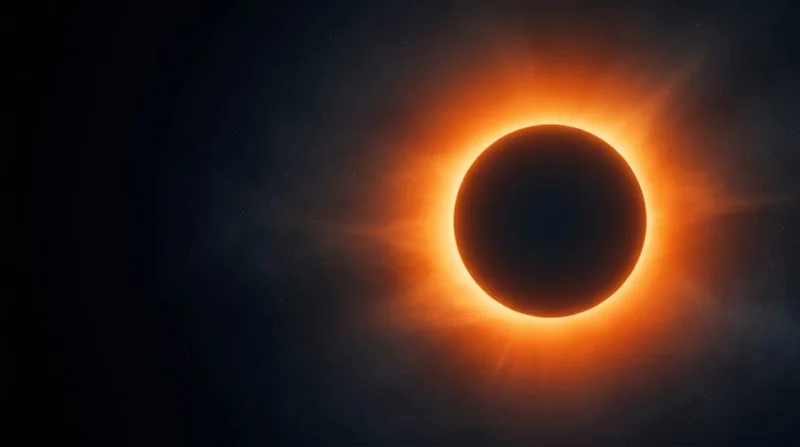
The standout documentary for this celestial event is "Total Solar Eclipse – Europe in the Shadow of the Moon." This 52-minute film, produced specifically for the August 12 event, details the various phases of a solar eclipse, from the initial contact of the Moon with the Sun to totality. It also covers the phenomena known as Baily's beads and the diamond ring effect, which can be observed just before and after total coverage.
The documentary addresses safe viewing practices and highlights locations with the best chances for clear skies. Additionally, it delves into modern solar research, featuring missions like NASA's Parker Solar Probe and ESA's Solar Orbiter, both of which provide new insights into the solar atmosphere, solar wind, and space weather.
The film also recounts the history of solar observation, tracing early astronomical records to contemporary missions that approach the Sun closer than any previous spacecraft.
"Total Solar Eclipse – Europe in the Shadow of the Moon" will air on ARTE on August 12, 2026, at 22:25 hours and will remain available online until January 29, 2027.
Harald Lesch Explains: "What is a Solar Eclipse?"
For those seeking a concise scientific overview, the ARD Mediathek offers a 15-minute episode of "alpha-Centauri" featuring astrophysicist Harald Lesch, who explains how a solar eclipse occurs. This format is straightforward and focuses on the astronomical fundamentals, making complex processes comprehensible without turning it into a grand television event.
This episode serves as an excellent primer for the eclipse day or as a quick refresher for anyone wanting to understand the alignment of the Sun, Moon, and Earth.
The episode will be available until August 5, 2027.
"With Open Eyes: The Magic of the Solar Eclipse"
A more visual perspective is provided by the short ARTE segment "With Open Eyes: The Magic of the Solar Eclipse." This piece features an elaborate photomontage by Australian astrophotographer Michael Goh, who spent two years preparing for the project. Thousands of individual images capture the various phases of a solar eclipse, revealing details that might be missed during a brief observation.
Astrophysicist Yaël Nazé discusses the evolving perceptions of solar eclipses, which were once viewed as ominous signs but are now understood as scientifically explicable events that unite people worldwide.
Running for about eleven minutes, this segment is not a lengthy documentary but serves as an engaging complement to the more in-depth ARTE production.
"Auroras Over Germany – Beautiful and Dangerous"
While only tangentially related to the solar eclipse, the ARD Wissen documentary "Auroras Over Germany – Beautiful and Dangerous" explores why auroras are increasingly visible in Germany. Journalist Lena Ganschow investigates the energetic particles from the Sun that interact with Earth's magnetic field and atmosphere.
This documentary highlights another facet of our central star: while the Sun provides light and warmth, it can also impact satellites, communication systems, and power grids through solar storms. The film effectively illustrates why solar research is crucial in our technology-driven lives. This documentary, released in 2024, will be available until the end of 2029.
Live Broadcast at Planetarium Hamburg
On August 12, the Planetarium Hamburg will host a "Long Night of Astronomy." Several programs and short lectures on the solar eclipse and the Perseid meteor shower are scheduled throughout the day.
Beginning at 19:45 hours, the planetarium will broadcast the total solar eclipse live from northern Spain, with director Dr. Björn Voss reporting from the scene. This event will connect the live transmission with explanations of the astronomical background, particularly interesting for those in Hamburg who will only see the partial phase. Viewers can follow the complete coverage of the Sun from Spain.
At 21:30 hours, a special segment on the Perseid meteor shower will take place, as this famous meteor stream peaks overnight from August 12 to 13.
Tickets for the planetarium events will be available for purchase.
Never Observe a Solar Eclipse Without Protection
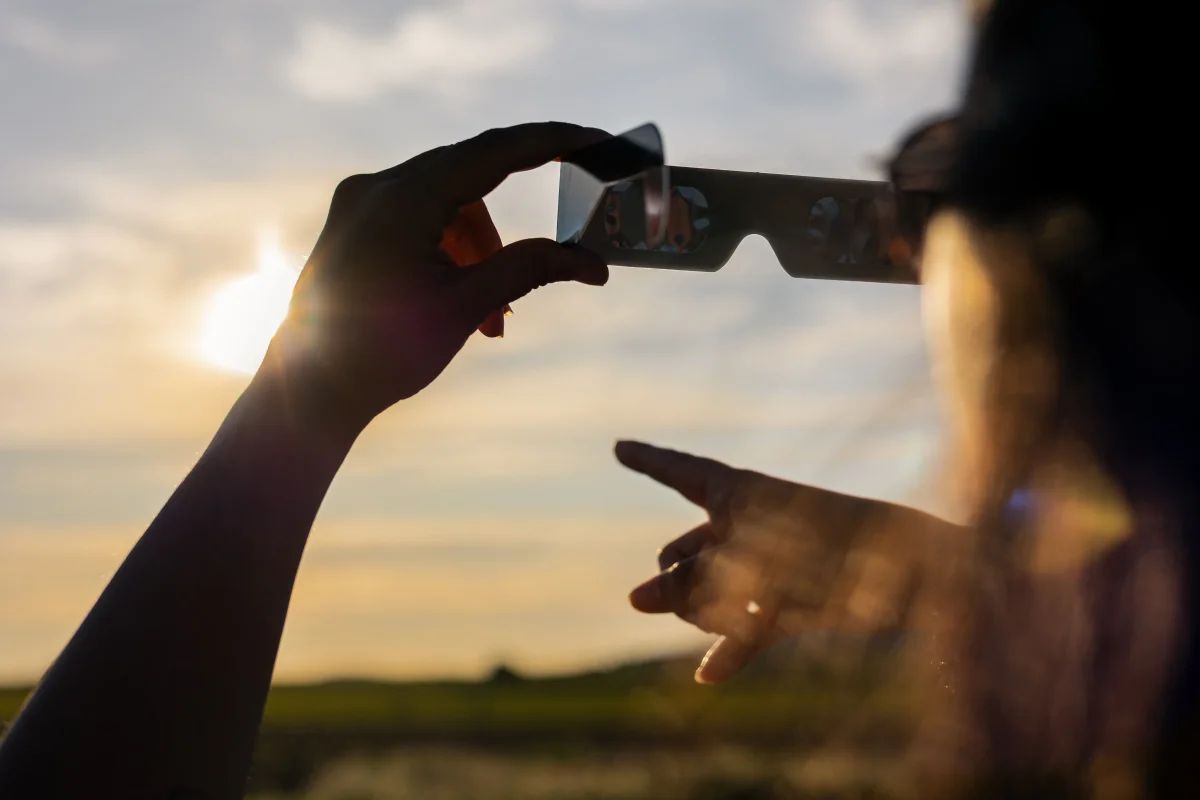
Even during a partial solar eclipse, it is crucial to avoid looking at the Sun without proper protection. Regular sunglasses, dark films, CDs, or blackened glass do not offer adequate safety.
The Federal Office for Radiation Protection recommends using specialized solar eclipse glasses designed for direct solar observation. These glasses should be intact and meet current safety standards.
Looking through binoculars, telescopes, or camera lenses without proper filters is particularly hazardous, as these devices concentrate the sunlight and can cause severe eye damage in a matter of seconds. Professional solar filters must be attached to the entrance of these instruments.
Smartphones should also not be pointed directly at the Sun without appropriate filters. Beyond potential camera damage, there is a risk of inadvertently looking at the Sun without protection while adjusting the device.
Key Documentary Recommendations
"Total Solar Eclipse – Europe in the Shadow of the Moon" ARTE, 52 minutes, available until January 29, 2027, TV broadcast on August 12 at 22:25 hours.
"What is a Solar Eclipse?" "alpha-Centauri" with Harald Lesch, ARD Mediathek, approximately 15 minutes, available until August 5, 2027.
"With Open Eyes: The Magic of the Solar Eclipse" ARTE, about eleven minutes, focusing on photography, science, and the cultural fascination with solar eclipses.
"Auroras Over Germany – Beautiful and Dangerous" ARD Wissen, available until the end of 2029, discussing solar storms and their impacts on Earth.
Conclusion
A solar eclipse is one of those natural events that, while scientifically explained, retains its profound impact on humanity. This time, the allure lies not only in witnessing the event in the sky but also in the opportunity to deepen our understanding through several documentaries. The total solar eclipse of 1999 remains etched in my memory – truly awe-inspiring! ❤️
My top documentary recommendation is undoubtedly "Total Solar Eclipse – Europe in the Shadow of the Moon." This ARTE documentary intertwines the current occasion with modern solar research and elucidates what happens during the various phases. For those who prefer a shorter, more focused approach, Harald Lesch’s "alpha-Centauri" provides the essential groundwork.
In Hamburg, we will need a bit of luck with the weather and, most importantly, an unobstructed view toward the western horizon. If clouds obscure the live spectacle, the live broadcast from Spain and the documentaries will still be available. The Moon will arrive on time – it’s just a matter of whether we can see it.