
The Ulam Spiral: A Dance of Numbers
The Ulam Spiral exemplifies how arranging numbers in a spiral reveals hidden structures among prime numbers, akin to the intricate patterns found in music and nature.

In the center of a sheet, the number 1 is placed; immediately to its right, the number 2; above the 2, the number 3; to the left of the 3, the numbers 4 and 5; and below the 5, the number 6, and so forth. This process continues, unfurling around the 1 in a manner reminiscent of a snail's shell, creating a spiral of ascending numbers. After this arrangement, prime numbers are identified, while the non-prime numbers are erased.

As this pattern develops, it begins to take on a distinct form. The spiral continues to expand, and prime numbers stand out against the backdrop of the other numbers, which have been removed.
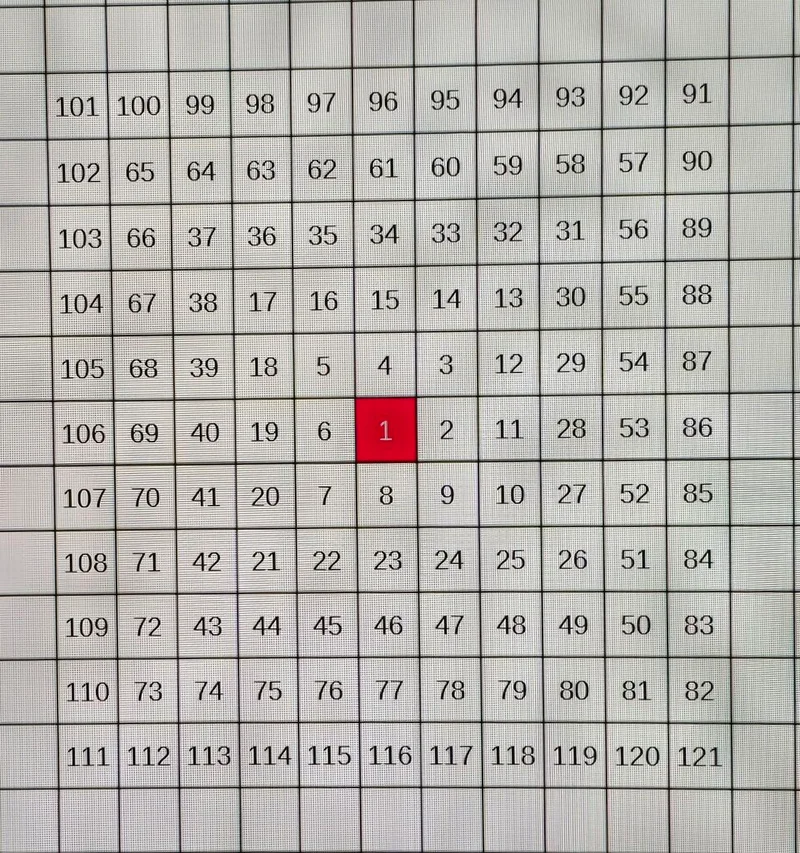
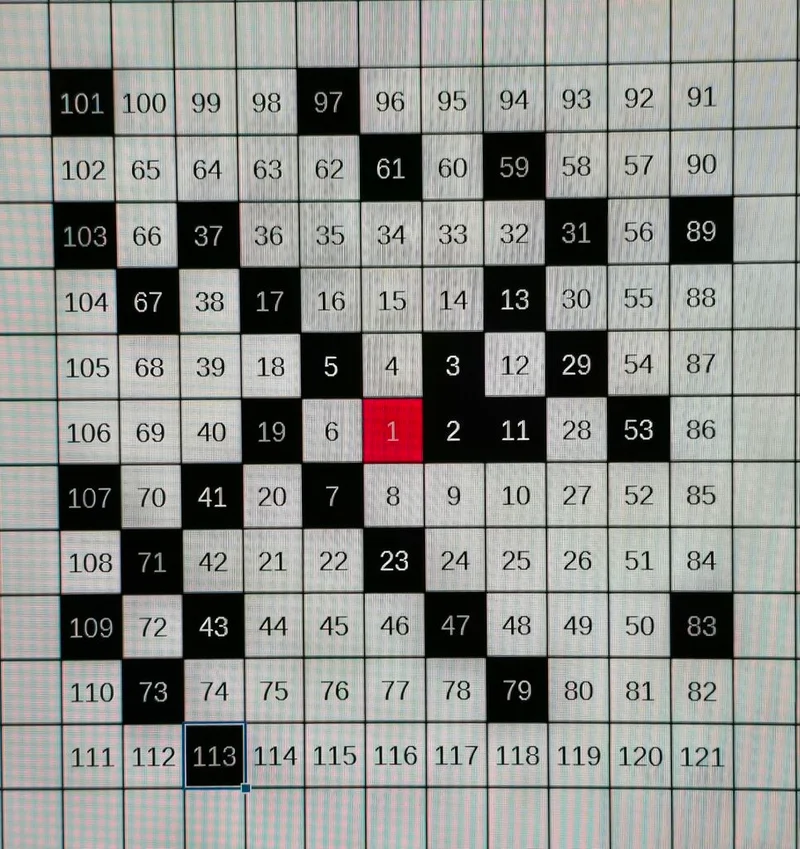
Eventually, after considerable time has passed, the figure evolves into various configurations:


Lines emerge across the spiral—diagonal, vertical, and horizontal—creating a web-like structure that evokes the Widmanstätten patterns found in metallic meteorites. These lines signify that within this twisted coordinate system, initially perceived as chaotic, the prime numbers begin to reveal a form and order, leading to the emergence of structures.
The illustration serves as a remarkable example of thinking outside the box. In the conventional orthonormal framework, prime numbers appear as an anarchic archipelago, a chaotic expanse without rules. However, by slightly shifting one’s perspective and arranging the numbers in a spiral or Fibonacci manner, immense regularities and linearities come to light, previously hidden from view. Suddenly, imperfect lines emerge, punctuated by gaps and interruptions that seem inexplicable, yet they unmistakably indicate the presence of an underlying structure. This structure, while not fully comprehensible, is akin to the main theme that resonates within the dense polyphony of Bach's Allegro from the Third Brandenburg Concerto.
Stay tuned for more…
In a musical illustration, the beginning of the Allegro from Johann Sebastian Bach's third Brandenburg Concerto plays softly in the background.