The Dark Influence of Jodi Hildebrandt: A Netflix Documentary
Explore the disturbing case of Jodi Hildebrandt and Ruby Franke in Netflix's documentary, revealing the dark side of manipulation and child abuse.

The Netflix documentary "Evil Influencer: The Jodi Hildebrandt Story" unveils a deeply troubling case from the United States, centering on former therapist Jodi Hildebrandt and family influencer Ruby Franke. Together, they forged a worldview that equated control with care and severe punishment with necessary discipline.
The film explores the mechanisms of psychological manipulation, raising a critical question: How could two adult women treat children so cruelly while believing themselves to be morally justified?
From Family Channel to Abuse Case
Ruby Franke gained fame through her YouTube channel, "8 Passengers," where she showcased the daily life of her seemingly functional Utah family, including her husband and six children. Millions tuned in to witness their parenting methods, family outings, and conflicts.
Despite some criticism of her parenting techniques at the time, Franke later partnered with Jodi Hildebrandt, who operated a counseling program called ConneXions and disseminated her views across social media.
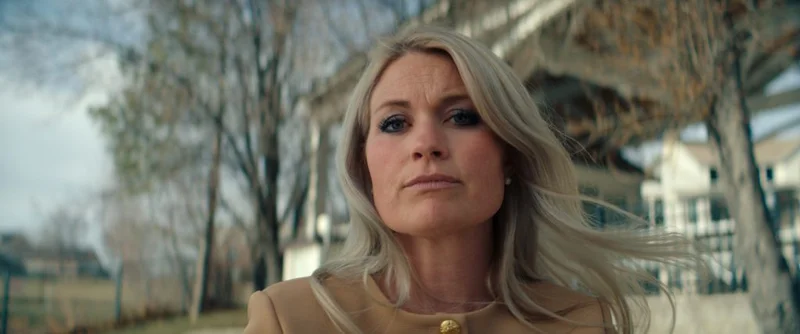
Hildebrandt divided the world into "truth" and "distortion." Those who questioned her beliefs were not merely dissenters; they were labeled as dishonest, manipulative, or morally corrupt. This binary thinking left little room for opposition, as any critique could be interpreted as further proof of the critic's alleged failings.
Netflix presents this documentary as an exploration of a case of manipulation and child abuse that came to light with the arrest of Hildebrandt and Franke. Further details about the film can be found on the official Netflix page.
A Child's Escape
The case gained public attention in August 2023 when Franke's twelve-year-old son escaped from Hildebrandt's home in Ivins, Utah, seeking help from a neighbor for food and water. The police, alerted by the neighbor, subsequently found his younger sister as well.
Investigations led to the arrest of both Jodi Hildebrandt and Ruby Franke, who later pleaded guilty to multiple counts of severe child abuse. In February 2024, they were sentenced to consecutive prison terms, with Utah law capping their total imprisonment at 30 years, though the exact duration will ultimately be determined by the parole board.
The documentary addresses the abuse without sensationalizing the children's suffering, which is crucial given the already harrowing facts. Any additional dramatization would neither enhance understanding nor serve journalistic integrity.
The Manipulation of Ruby Franke
During her sentencing, Ruby Franke portrayed herself as a woman whose perception had been profoundly influenced by Jodi Hildebrandt. She recounted how she increasingly blurred the lines between good and evil, viewing her own family as a threat.
The documentary effectively illustrates this process. Hildebrandt's system thrived on moral certainties, isolation, and the continual redefinition of common conflicts. What was once uncertainty morphed into perceived sin, dissent became "distortion," and obedience was seen as a testament to moral purity.
However, this explanation does not alleviate the discomfort surrounding the situation. One need not fully accept Franke's narrative. Importantly, manipulation should not be confused with a lack of responsibility.
Franke was not a child or an incapable individual; she was an adult mother who should have relied on her own moral compass. Faced with the visible suffering of her children, any ideology should have crumbled. The fact that it did not can be attributed to Hildebrandt's influence, but it cannot be excused.
Shared Accountability
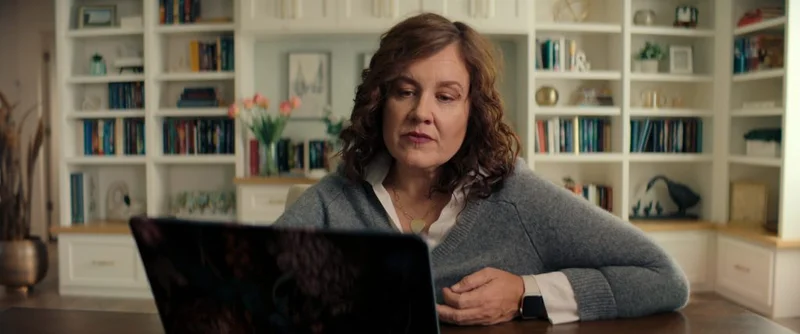
It is tempting to view Jodi Hildebrandt as the sole manipulative perpetrator and Ruby Franke as merely her brainwashed victim. However, the Netflix documentary reveals that this simplistic dichotomy is insufficient.
Hildebrandt was the architect of the ideological system, claiming moral and therapeutic authority while isolating individuals from one another. Her influence over families and relationships was significant, and even after her conviction, her statements suggest she may not fully grasp the extent of her actions. Her delusion appears to persist.
Yet Ruby Franke did not merely passively adopt these ideas; she actively participated in their implementation, directing them against her own children. Both women were adults and should have recognized when they crossed boundaries. Both are accountable for their actions.
Manipulation can elucidate how someone gradually loses their judgment, but it does not automatically negate personal responsibility—especially when vulnerable individuals are harmed.
Therapy as Unassailable Authority
Hildebrandt's professional role is particularly concerning. Those seeking therapeutic support often find themselves in vulnerable situations. A therapist gains insight into their clients' fears, conflicts, guilt, and personal relationships, which necessitates clear professional and ethical boundaries.
In Hildebrandt's case, her counseling increasingly morphed into ideological control. Her categories dictated who was honest, what constituted healthy relationships, and whose perceptions were deemed valid.
This underscores the broader implications of the case. Dangerous influence does not always begin with overt coercion; it can start with the promise of clarity. As the resulting system becomes more closed, it becomes increasingly difficult for victims to recognize contradictions. Doubt is not seen as critical thinking but as part of the problem.
A Gripping Yet Difficult Documentary
"Evil Influencer" is skillfully structured and remains engaging despite the already known outcome. Netflix methodically reconstructs how a family influencer and a respected counselor became a destructive duo.
The film adopts an appropriate tone, contextualizing the backstory, revealing psychological mechanisms, and maintaining focus on the accountability of those involved. It avoids unnecessary length and sensationalism.
The concentrated structure is one of the strengths of many recent Netflix documentaries. They often begin with a specific incident and gradually peel back layers to reveal a larger narrative. In this case, the tension arises not from artificial cliffhangers but from the growing realization of the extent of Hildebrandt's influence.
⭐️ Conclusion: Manipulation is No Excuse
"Evil Influencer: The Jodi Hildebrandt Story" is a compelling yet disheartening true-crime documentary. It clearly illustrates how control, moral absolutism, and psychological manipulation can alter a person's thinking.
Ultimately, however, two adult women inflicted severe suffering on children. Jodi Hildebrandt emerges as the driving force behind a closed and destructive system. While Ruby Franke may have been credibly influenced, she remains responsible for her own choices.
The film leaves an unanswered question: How can a person be so cruel to children? While it explains the path to such cruelty, it does not make it comprehensible.
Text sources: Netflix: "Evil Influencer: The Jodi Hildebrandt Story" – official film site, People: Background on the documentary and investigation results, People: Ruby Franke's conviction and current imprisonment status, People: Jodi Hildebrandt's family and other abuse allegations.